IMDRF/RPS WG/N32 FINAL: 2015 Strategic Assessment of Electronic Submission Messaging Formats - PDF (242Kb)
标准简介
Strategic Assessment of Electronic Submission Messaging Formats - PDF (242Kb)[附网盘链接]是IMDRF RPS WG发布的GHTF标准,适用于全球。标准截图
![Strategic Assessment of Electronic Submission Messaging Formats - PDF (242Kb)[附网盘链接]](/img/20210914103522ionnh.jpg)
标准文档说明
标准文档类型为Strategic Assessment of Electronic Submission Messaging Formats - PDF (242Kb)[附网盘链接]高清PDF版本(文字版),标准文档内可进行搜索,可以复制原文,可粘贴。标准部分原文
The summary below includes views expressed during all discussions for full transparency and an
accurate view of the diverse perspectives. As a result the final scores are based the weighted average and
do not represent individual stakeholder viewpoints.
The main concern within industry remains the cost to implement and maintain software tools that may
be required for any option. Many companies with simple submissions in particular do not see any
benefit to the additional costs they feel would be incurred for all options.
Since consideration of options 3 and 4 are currently in an early exploratory stage, it was understood
throughout industry discussions that a robust cost-benefit analysis is not possible at this time. For
industry stakeholder adoption this is a significant consideration, and will need to be assessed once
sufficient implementation planning has been done to support such an analysis. Industry views this cost-
benefit analysis as a critical step.
Efficiently produce submissions for multiple regions without managing multiple submission
creation processes, and software tools
Although some companies could see the potential benefit of meeting this objective, there were
some that did not view this as a priority. Companies who operate in a de-centralized fashion
today manage multiple processes and tools as a result of the way they are structured.
Introduction of a harmonized submission format is not likely to change that. Among those
companies, some viewed all options as adding unnecessary complexity.
There were many companies who felt the move to a harmonized format is worthwhile. Although
there was concern that even with use of a messaging standard like RPS, each region may impose
unique implementation requirements that would undermine this objective. Regional differences
in eCTD implementation were cited as an example.
Some felt that Option 4 would only be the best choice if regional variance could be eliminated,
and tools used to create the RPS format also could produce PDF and other paper format
submissions to meet requirements in countries that do not recognize the format chosen by
IMDRF.
Generally, companies with simple submissions preferred use of the folder structure.
Enable a clear view to the lifecycle of Application content over time, as well as the ability to
quickly see the most current version of an Application.
Companies with complex submissions who currently manage submissions with many
supplements or change submissions that occur over time saw the benefit of content lifecycle
tracking. This clearly resonated with those who manage multiple PMAs in the US, and with
European companies who manage design dossiers.
Some companies noted that the ability to fully take advantage of lifecycle tracking will depend
on the tools available to industry, and on the cost of those tools.
Some did not see that Option 2 provided any ability to manage lifecycle of submission content.
Others noted that since RPS is being adopted by ICH as eCTD v4.0, it clearly meets
requirements for submission lifecycle tracking.
2 October 2015 Page 19 of 36
网盘链接
百度网盘:https://pan.baidu.com/s/1dyPlF1-WcbOaEe2CeTPpVw
提取码:u73e
【温馨提示】大资料ISO是提供信息发布的专业信息类网站,所有内容均由用户发布,不代表本站观点,本站亦不存储所涉及的文件及资料。如有【免费资料】以及【付费资料】,请用户根据自己的需求,自行判断是否需要获取。如有交易诈骗、内容侵权可发送邮件至kf@dzl100.com,我们审查后若发现情况属实,会立即对相关内容进行删除处理。
加载用时:48.6206 毫秒
相关评论
相关文章
-
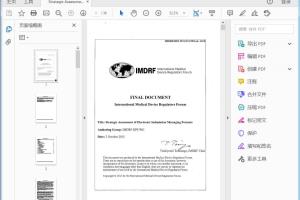
IMDRF/RPS WG/N32 FINAL: 2015 Strategic Assessment of Electronic Submission Messaging Formats - PDF (242Kb)
Strategic Assessment of Electronic Submission Messaging Formats - PDF (242Kb)[附网盘链接]是IMDRF RPS WG于2 October 2015发布的GHTF标准,适用于全球。本次分享的标准文档为高清PDF(文字版),标准文档内可搜索,可复制,可粘贴。本文结尾附网盘链接。
-
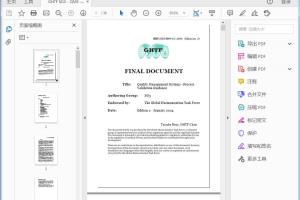
GHTF/SG3/N99-10:2004 (Edition 2) GHTF SG3 - QMS - Process Validation Guidance - January 2004 - PDF (162kb)
GHTF SG3 - QMS - Process Validation Guidance - January 2004 - PDF (162kb)[附网盘链接]是SG3于Edition 2 - January 2004发布的GHTF标准,适用于世界。本次分享的标准文档为高清PDF(文字版),标准文档内可搜索,可复制,可粘贴。本文结尾附网盘链接。
-
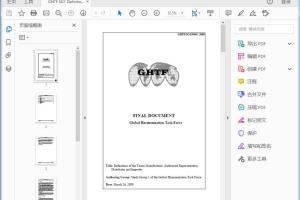
GHTF/SG1/N055: 2009 GHTF SG1 - Definition Terms - Manufacturer - Authorised Representative - Distributor and Importer - PDF (41kb)
GHTF SG1 - Definition Terms - Manufacturer - Authorised Representative - Distributor and Importer - PDF (41kb)[附网盘链接]是Study Group 1 of the Global Harmonization Task Force于March 26, 2009发布的GHTF标准,适用于世界范围。本次分享的标准文档为高清PDF(文字版),标准文档内可搜索,可复制,可粘贴。本文结尾附网盘链接。
-
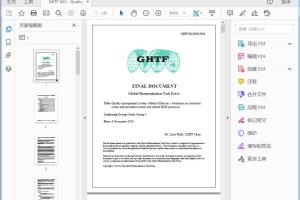
GHTF/SG3/N18:2010 GHTF SG3 - Quality management system - Medical Devices - Guidance on corrective action and preventive action and related QMS processes - November 2010 - PDF (254kb)
GHTF SG3 - Quality management system - Medical Devices - Guidance on corrective action and preventive action and related QMS processes - November 2010 - PDF (254kb)[附网盘链接]是Study Group 3于4 November 2010发布的GHTF标准,适用于世界。本次分享的标准文档为高清PDF(文字版),标准文档内可搜索,可复制,可粘贴。本文结尾附网盘链接。
-
GHTF/SG3/N17:2008 GHTF SG3 - Quality Management System - Medical Devices - Guidance on the Control of Products and Services Obtained from Suppliers - December 2008 - PDF (593kb)
GHTF SG3 - Quality Management System - Medical Devices - Guidance on the Control of Products and Services Obtained from Suppliers - December 2008 - PDF (593kb)[附网盘链接]是GHTF Study Group 3于December 11, 2008发布的GHTF标准,适用于全球范围。本次分享的标准文档为高清PDF(文字版),标准文档内可搜索,可复制,可粘贴。本文结尾附网盘链接。
-
IMDRF MDCE WG/N57FINAL:2019 (formerly GHTF/SG5/N3:2010) Clinical Investigation - PDF (267kb)
Clinical Investigation - PDF (267kb)[附网盘链接]是Medical Device Clinical Evaluation Working Group于10 October 2019发布的GHTF标准,适用于全球范围。本次分享的标准文档为高清PDF(文字版),标准文档内可搜索,可复制,可粘贴。本文结尾附网盘链接。
-
IMDRF MDCE WG/N55 FINAL:2019 (formerly GHTF/SG5/N1R8:2007) Clinical Evidence - Key Definitions and Concepts - PDF (185kb)
Clinical Evidence - Key Definitions and Concepts - PDF (185kb)[附网盘链接]是Medical Device Clinical Evaluation Working Group于10 October 2019发布的GHTF标准,适用于世界。本次分享的标准文档为高清PDF(文字版),标准文档内可搜索,可复制,可粘贴。本文结尾附网盘链接。
-
GHTF/SG1/N071:2012 GHTF SG1 - Definition of Terms Medical Device and In Vitro Diagnostic Medical Device - May 2012 - PDF (240kb)
GHTF SG1 - Definition of Terms Medical Device and In Vitro Diagnostic Medical Device - May 2012 - PDF (240kb)[附网盘链接]是Study Group 1 of the Global Harmonization Task Force于May 16 , 2012发布的GHTF标准,适用于世界。本次分享的标准文档为高清PDF(文字版),标准文档内可搜索,可复制,可粘贴。本文结尾附网盘链接。
-

IMDRF/GRRP WG/N47 FINAL:2018 Essential Principles of Safety and Performance of Medical Devices and IVD Medical Devices - PDF (260kb)
Essential Principles of Safety and Performance of Medical Devices and IVD Medical Devices - PDF (260kb)[附网盘链接]是IMDRF Good Regulatory Review Practices Group于31 October 2018发布的GHTF标准,适用于世界。本次分享的标准文档为高清PDF(文字版),标准文档内可搜索,可复制,可粘贴。本文结尾附网盘链接。
-
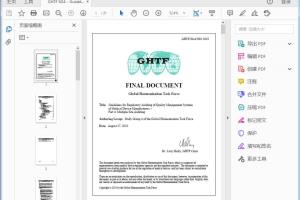
GHTF/SG4/N83:2010 GHTF SG4 - Guidelines for Regulatory Auditing of Quality Management Systems of Medical Device Manufacturers - Part 4 Multiple Site Auditing - August 2010 - PDF (157kb)
GHTF SG4 - Guidelines for Regulatory Auditing of Quality Management Systems of Medical Device Manufacturers - Part 4 Multiple Site Auditing - August 2010 - PDF (157kb)[附网盘链接]是Study Group 4 of the Global Harmonization Task Force于August 27, 2010发布的GHTF标准,适用于全球。本次分享的标准文档为高清PDF(文字版),标准文档内可搜索,可复制,可粘贴。本文结尾附网盘链接。
-
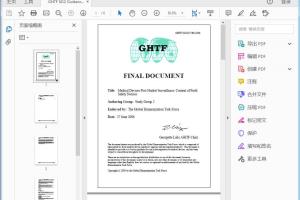
GHTF/SG2/N57R8:2006 GHTF SG2 - Guidance - Content of Field Safety Notices - PDF (58kb)
GHTF SG2 - Guidance - Content of Field Safety Notices - PDF (58kb)[附网盘链接]是Study Group 2于27 June 2006发布的GHTF标准,适用于全球。本次分享的标准文档为高清PDF(文字版),标准文档内可搜索,可复制,可粘贴。本文结尾附网盘链接。
-

GHTF GHTF SG2 - Manufacturer's Trend Reporting of Adverse Events - January 2003 - PDF (488kb)
GHTF SG2 - Manufacturer's Trend Reporting of Adverse Events - January 2003 - PDF (488kb)[附网盘链接]是The Global Harmonization Task Force于当前发布的GHTF标准,适用于世界。本次分享的标准文档为高清PDF(文字版),标准文档内可搜索,可复制,可粘贴。本文结尾附网盘链接。
-
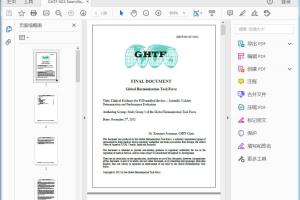
GHTF/SG5/N7:2012 GHTF SG5 Scientific Validity Determination and Performance Evaluation - November 2012 - PDF (746kb)
GHTF SG5 Scientific Validity Determination and Performance Evaluation - November 2012 - PDF (746kb)[附网盘链接]是Study Group 5 of the Global Harmonization Task Force于November 2 , 2012发布的GHTF标准,适用于全球。本次分享的标准文档为高清PDF(文字版),标准文档内可搜索,可复制,可粘贴。本文结尾附网盘链接。
-

IMDRF/SaMD WG/N12FINAL:2014 Software as a Medical Device Possible Framework for Risk Categorization and Corresponding Considerations - PDF (243kb)
Software as a Medical Device Possible Framework for Risk Categorization and Corresponding Considerations - PDF (243kb)[附网盘链接]是IMDRF Software as a Medical Device (SaMD) Working Group于18 September 2014发布的GHTF标准,适用于世界。本次分享的标准文档为高清PDF(文字版),标准文档内可搜索,可复制,可粘贴。本文结尾附网盘链接。
-
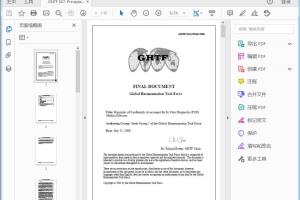
GHTF/SG1/N046:2008 GHTF SG1 - Principles of CA for IVD Medical Devices - July 2008 - PDF (87kb)
GHTF SG1 - Principles of CA for IVD Medical Devices - July 2008 - PDF (87kb)[附网盘链接]是Study Group 1 of the Global Harmonization Task Force于July 31, 2008发布的GHTF标准,适用于全球范围。本次分享的标准文档为高清PDF(文字版),标准文档内可搜索,可复制,可粘贴。本文结尾附网盘链接。