l l V I U f i r Device Regulators Forum Clinical Evaluation - PDF (322kb)
标准简介
Clinical Evaluation - PDF (322kb)[附网盘链接]是Medical Device Clinical Evaluation Working Group于10 October 2019发布的GHTF标准,适用于全球。标准截图
![Clinical Evaluation - PDF (322kb)[附网盘链接]](/img/20210914103508dp5uo.jpg)
标准文档说明
标准文档类型为Clinical Evaluation - PDF (322kb)[附网盘链接]高清PDF版本(文字版),标准文档内可进行搜索,可以复制原文,可粘贴。标准部分原文
1.0 Introduction
This document supersedes an earlier version produced under the Global Harmonization Task
Force (GHTF) with the same title in May, 2007(GHTF/SG5/N2R8:2007).
What is clinical evaluation?
Clinical evaluation is a set of ongoing activities that use scientifically sound methods for the
assessment and analysis of clinical data to verify the safety, clinical performance and/or
effectiveness of the medical device when used as intended by the manufacturer.
When is clinical evaluation undertaken?
Clinical evaluation is an ongoing process conducted throughout the life cycle of a medical
device. It is first performed during the development of a medical device in order to identify data
that need to be generated for regulatory purposes and will inform if a new device clinical
investigation is necessary, together with the outcomes which need to be studied. It is then
repeated periodically as new safety, clinical performance and/or effectiveness information about
the medical device is obtained during its use. This information is fed into the ongoing risk
management process (according to ISO 14971:2007) and may result in changes to the
manufacturer's risk assessment, clinical investigation documents, Instructions for Use and post
market activities.
Why is clinical evaluation important?
When placing a medical device on the market, the manufacturer must have demonstrated
through the use of appropriate conformity assessment procedures that the medical device
complies with the Essential Principles of Safety and Performance of Medical Devices (the
Essential Principles). Generally, it is expected that the manufacturer has demonstrated the
medical device achieves its intended performance during use according to its labelling (i.e.
information supplied by the manufacturer) and that the known and foreseeable risks are
minimised and acceptable when weighed against the benefits. Any claims made about the
medical device’s safety, clinical performance and/or effectiveness should be supported by
suitable evidence.
With regard to post market activities, manufacturers are expected to implement and maintain
surveillance programs that routinely monitor the safety, clinical performance and/or effectiveness
of the medical device as part of their Quality Management System. The scope and nature of
such post market surveillance should be appropriate to the medical device and its intended use.
Using data generated from such programs (e.g. safety reports, including adverse event reports;
results from published literature, any further clinical investigations), a manufacturer should
periodically review performance, safety and the benefit-risk assessment for the medical device
through a clinical evaluation, and update the clinical evidence accordingly. This ongoing
clinical evaluation process should allow manufacturers to communicate with conformity
assessment bodies and regulatory authorities in accordance with local reporting requirements any
information that has an important bearing on the benefit-risk assessment of the medical device or
网盘链接
百度网盘:https://pan.baidu.com/s/1Myr4zN6esQp_vr5UhmGjAA
提取码:pc75
【温馨提示】大资料ISO是提供信息发布的专业信息类网站,所有内容均由用户发布,不代表本站观点,本站亦不存储所涉及的文件及资料。如有【免费资料】以及【付费资料】,请用户根据自己的需求,自行判断是否需要获取。如有交易诈骗、内容侵权可发送邮件至kf@dzl100.com,我们审查后若发现情况属实,会立即对相关内容进行删除处理。
加载用时:68.5414 毫秒
相关评论
相关文章
-

l l V I U f i r Device Regulators Forum Clinical Evaluation - PDF (322kb)
Clinical Evaluation - PDF (322kb)[附网盘链接]是Medical Device Clinical Evaluation Working Group于10 October 2019发布的GHTF标准,适用于全球。本次分享的标准文档为高清PDF(文字版),标准文档内可搜索,可复制,可粘贴。本文结尾附网盘链接。
-
GHTF/SG3/N99-10:2004 (Edition 2) GHTF SG3 - QMS - Process Validation Guidance - January 2004 - PDF (162kb)
GHTF SG3 - QMS - Process Validation Guidance - January 2004 - PDF (162kb)[附网盘链接]是SG3于Edition 2 - January 2004发布的GHTF标准,适用于世界。本次分享的标准文档为高清PDF(文字版),标准文档内可搜索,可复制,可粘贴。本文结尾附网盘链接。
-

GHTF/SG3/N18:2010 GHTF SG3 - Quality management system - Medical Devices - Guidance on corrective action and preventive action and related QMS processes - November 2010 - PDF (254kb)
GHTF SG3 - Quality management system - Medical Devices - Guidance on corrective action and preventive action and related QMS processes - November 2010 - PDF (254kb)[附网盘链接]是Study Group 3于4 November 2010发布的GHTF标准,适用于世界。本次分享的标准文档为高清PDF(文字版),标准文档内可搜索,可复制,可粘贴。本文结尾附网盘链接。
-

GHTF/SG1/N055: 2009 GHTF SG1 - Definition Terms - Manufacturer - Authorised Representative - Distributor and Importer - PDF (41kb)
GHTF SG1 - Definition Terms - Manufacturer - Authorised Representative - Distributor and Importer - PDF (41kb)[附网盘链接]是Study Group 1 of the Global Harmonization Task Force于March 26, 2009发布的GHTF标准,适用于世界范围。本次分享的标准文档为高清PDF(文字版),标准文档内可搜索,可复制,可粘贴。本文结尾附网盘链接。
-

GHTF/SG3/N17:2008 GHTF SG3 - Quality Management System - Medical Devices - Guidance on the Control of Products and Services Obtained from Suppliers - December 2008 - PDF (593kb)
GHTF SG3 - Quality Management System - Medical Devices - Guidance on the Control of Products and Services Obtained from Suppliers - December 2008 - PDF (593kb)[附网盘链接]是GHTF Study Group 3于December 11, 2008发布的GHTF标准,适用于全球范围。本次分享的标准文档为高清PDF(文字版),标准文档内可搜索,可复制,可粘贴。本文结尾附网盘链接。
-
IMDRF MDCE WG/N57FINAL:2019 (formerly GHTF/SG5/N3:2010) Clinical Investigation - PDF (267kb)
Clinical Investigation - PDF (267kb)[附网盘链接]是Medical Device Clinical Evaluation Working Group于10 October 2019发布的GHTF标准,适用于全球范围。本次分享的标准文档为高清PDF(文字版),标准文档内可搜索,可复制,可粘贴。本文结尾附网盘链接。
-
IMDRF MDCE WG/N55 FINAL:2019 (formerly GHTF/SG5/N1R8:2007) Clinical Evidence - Key Definitions and Concepts - PDF (185kb)
Clinical Evidence - Key Definitions and Concepts - PDF (185kb)[附网盘链接]是Medical Device Clinical Evaluation Working Group于10 October 2019发布的GHTF标准,适用于世界。本次分享的标准文档为高清PDF(文字版),标准文档内可搜索,可复制,可粘贴。本文结尾附网盘链接。
-

GHTF/SG1/N071:2012 GHTF SG1 - Definition of Terms Medical Device and In Vitro Diagnostic Medical Device - May 2012 - PDF (240kb)
GHTF SG1 - Definition of Terms Medical Device and In Vitro Diagnostic Medical Device - May 2012 - PDF (240kb)[附网盘链接]是Study Group 1 of the Global Harmonization Task Force于May 16 , 2012发布的GHTF标准,适用于世界。本次分享的标准文档为高清PDF(文字版),标准文档内可搜索,可复制,可粘贴。本文结尾附网盘链接。
-

IMDRF/GRRP WG/N47 FINAL:2018 Essential Principles of Safety and Performance of Medical Devices and IVD Medical Devices - PDF (260kb)
Essential Principles of Safety and Performance of Medical Devices and IVD Medical Devices - PDF (260kb)[附网盘链接]是IMDRF Good Regulatory Review Practices Group于31 October 2018发布的GHTF标准,适用于世界。本次分享的标准文档为高清PDF(文字版),标准文档内可搜索,可复制,可粘贴。本文结尾附网盘链接。
-
GHTF/SG2/N57R8:2006 GHTF SG2 - Guidance - Content of Field Safety Notices - PDF (58kb)
GHTF SG2 - Guidance - Content of Field Safety Notices - PDF (58kb)[附网盘链接]是Study Group 2于27 June 2006发布的GHTF标准,适用于全球。本次分享的标准文档为高清PDF(文字版),标准文档内可搜索,可复制,可粘贴。本文结尾附网盘链接。
-
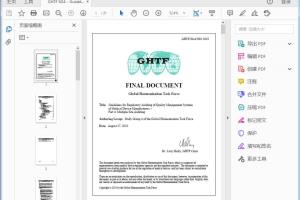
GHTF/SG4/N83:2010 GHTF SG4 - Guidelines for Regulatory Auditing of Quality Management Systems of Medical Device Manufacturers - Part 4 Multiple Site Auditing - August 2010 - PDF (157kb)
GHTF SG4 - Guidelines for Regulatory Auditing of Quality Management Systems of Medical Device Manufacturers - Part 4 Multiple Site Auditing - August 2010 - PDF (157kb)[附网盘链接]是Study Group 4 of the Global Harmonization Task Force于August 27, 2010发布的GHTF标准,适用于全球。本次分享的标准文档为高清PDF(文字版),标准文档内可搜索,可复制,可粘贴。本文结尾附网盘链接。
-

GHTF GHTF SG2 - Manufacturer's Trend Reporting of Adverse Events - January 2003 - PDF (488kb)
GHTF SG2 - Manufacturer's Trend Reporting of Adverse Events - January 2003 - PDF (488kb)[附网盘链接]是The Global Harmonization Task Force于当前发布的GHTF标准,适用于世界。本次分享的标准文档为高清PDF(文字版),标准文档内可搜索,可复制,可粘贴。本文结尾附网盘链接。
-
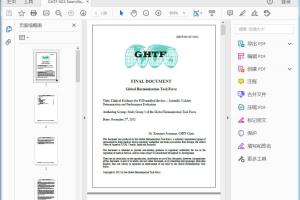
GHTF/SG5/N7:2012 GHTF SG5 Scientific Validity Determination and Performance Evaluation - November 2012 - PDF (746kb)
GHTF SG5 Scientific Validity Determination and Performance Evaluation - November 2012 - PDF (746kb)[附网盘链接]是Study Group 5 of the Global Harmonization Task Force于November 2 , 2012发布的GHTF标准,适用于全球。本次分享的标准文档为高清PDF(文字版),标准文档内可搜索,可复制,可粘贴。本文结尾附网盘链接。
-

IMDRF/SaMD WG/N12FINAL:2014 Software as a Medical Device Possible Framework for Risk Categorization and Corresponding Considerations - PDF (243kb)
Software as a Medical Device Possible Framework for Risk Categorization and Corresponding Considerations - PDF (243kb)[附网盘链接]是IMDRF Software as a Medical Device (SaMD) Working Group于18 September 2014发布的GHTF标准,适用于世界。本次分享的标准文档为高清PDF(文字版),标准文档内可搜索,可复制,可粘贴。本文结尾附网盘链接。
-
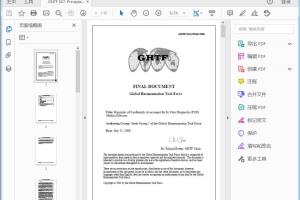
GHTF/SG1/N046:2008 GHTF SG1 - Principles of CA for IVD Medical Devices - July 2008 - PDF (87kb)
GHTF SG1 - Principles of CA for IVD Medical Devices - July 2008 - PDF (87kb)[附网盘链接]是Study Group 1 of the Global Harmonization Task Force于July 31, 2008发布的GHTF标准,适用于全球范围。本次分享的标准文档为高清PDF(文字版),标准文档内可搜索,可复制,可粘贴。本文结尾附网盘链接。